Ways To Cleanup Costs in Large Paint Operations
Large paint operations can burn through money fast. Between solvent use, booth maintenance, overspray, labor, waste handling, and downtime, even small inefficiencies can turn into expensive habits. The good news is that teams don’t always need a full process overhaul to cut costs. They can often find savings by tightening daily routines, tracking material use, and giving workers better systems for cleanup. Use these ideas to help cleanup costs in large paint operations.
Track Where Waste Starts
Paint waste often starts before anyone picks up a spray gun. Teams may mix too much product, open more containers than they need, or leave materials exposed too long. Managers can reduce waste by setting clear mixing targets for each job and comparing expected use with the final amount consumed.
This step also helps teams spot patterns. One shift may use more solvent than another. One product line may create more cleanup time than similar jobs. When managers review those details, they can make practical changes instead of guessing where the money goes.
Control Solvent Use
Solvents support daily paint work, but uncontrolled use can drive up costs quickly. Workers may use fresh solvent for tasks that don’t require it, or they may discard solvent before it loses its cleaning value. Large operations can cut expenses by creating clear solvent-use categories for initial rinsing, final cleaning, and equipment maintenance.
A closed cleaning station can also help workers use less material during gun and part cleanup. When teams capture and reuse compatible solvents, they reduce purchasing needs and waste disposal volume. Acetone reuse supports large-scale painting because it gives shops a way to stretch solvent value while keeping cleanup practical.
Improve Booth Habits
Paint booths affect both finish quality and cleanup costs. Dirty filters, poor airflow, and messy prep habits can increase overspray and rework. Rework costs more than the extra paint. It also takes labor, booth time, masking materials, and cleanup supplies away from new jobs.
Teams should replace filters on a planned schedule, clean booth surfaces before buildup spreads, and train workers to prep parts outside the spray zone whenever possible. Better booth habits help crews finish jobs faster and avoid waste that builds across every production run.
Reduce Overspray
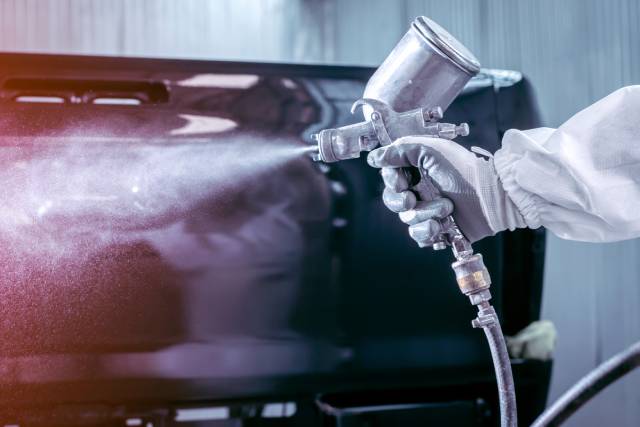
Overspray wastes paint and makes cleanup harder. Operators can reduce it by choosing the right spray tips, checking pressure settings, and keeping equipment in good condition. Worn tips can change spray patterns, which pushes more material into the air instead of onto the surface.
Training also plays a major role. A painter who uses the right distance, angle, and overlap can improve transfer efficiency without slowing production. In high-volume environments, that skill can save gallons of paint over time.
Standardize Cleanup Steps
Cleanup should never depend on guesswork. When each worker follows a different routine, costs become harder to control. A standard process helps crews clean equipment thoroughly without using extra solvent, wipes, or time.
Managers can post simple cleanup instructions near workstations and update them when products or equipment change. They can also assign storage locations for tools, lids, strainers, and cleaning supplies. Organized stations reduce wasted motion and help employees finish cleanup faster at the end of each job.
Make Cost Control Routine
Large paint operations don’t need to accept high cleanup costs as part of doing business. When teams track waste, manage solvent use, care for booths, reduce overspray, and standardize cleanup, they create steady savings across daily production. Small improvements can add up quickly when every job uses less material, creates less waste, and keeps crews moving with fewer delays.

You May Also Like

Industrial Freezer Tips To Keep Your Food Fresh

How To Get Ahead In a Global Job Market

